About Me

Craig Pellegrino

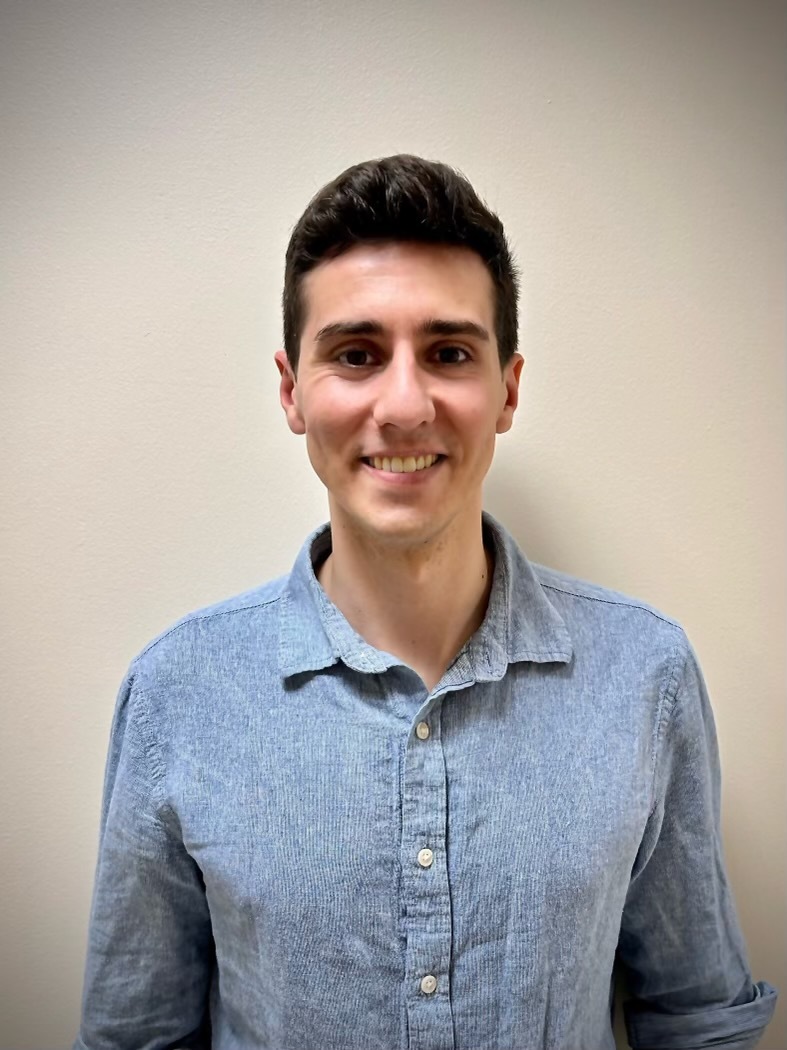
Hi! I'm Craig Pellegrino, a Staff Scientist at NASA Goddard Space Flight Center. I work on NASA's Astrophysics Cross-Observatory Science Support (ACROSS) team, where I build software infrastructure to support time-domain and multi-messenger astrophysics research. My research focuses on supernovae and the ways in which stars evolve during their final years before exploding. I'm particularly interested in finding rare and unusual classes of supernovae to better understand the nature of their progenitor stars, and in developing machine-learning frameworks to classify and characterize transients at scale.

Before joining NASA I was a postdoctoral research associate at the University of Virginia, working in Professor Maryam Modjaz's group. Before that, I graduated from the University of California, Santa Barbara with a PhD in physics (astrophysics emphasis) in 2023, where I was advised by Dr. Andy Howell and worked closely with Las Cumbres Observatory. Before that, I graduated with honors from Vassar College in 2018, where I double majored in physics and astronomy.


Feel free to get in touch.

Research Interests

I'm an observational astronomer currently working at NASA Goddard Space Flight Center. My research focuses on transients such as supernovae and electromagnetic counterparts to gravitational wave sources. Studying these phenomena allows us to better understand the way stars evolve and ultimately die. In particular, I focus on rare and unusual types of supernovae that reveal previously-unknown stages of stellar evolution or different mechanisms through which stars shed their outer layers before exploding. Click below to check out some of my specific research projects:

Recent studies have shown that many massive stars lose part or all of their outer layers in their final years. For example, we have discovered a new class of supernovae, called Type Icn supernovae, which come from massive stars that lost all of their hydrogen and helium layers. I studied the first sample of supernovae belonging to this rare class. Using their photometric and spectroscopic datasets, combined with information about their host galaxies, we found that multiple types of progenitor stars and mass-loss mechanisms are likely needed to explain their observed diversity. Read more about this research here.

As we discover more supernovae, we've also discovered some transients that rise and fade in brightness much faster than other known classes. I am interested in finding these fast-evolving supernovae as quickly as possible in order to study their progenitor stars and powering mechanisms. In particular, I have published a comparison of some photometrically-identified fast-evolving supernovae to models and observations of supernovae powered by circumstellar interaction, in which the supernova ejecta collides with pre-existing material lost by the progenitor star. This comparison suggests that some fast-evolving supernovae are the explosions of massive stars that lost a significant fraction of their mass in their final years.

Much of my research involves comparing theoretical models to supernova observations within hours to days of their explosion in order to estimate properties of their progenitors, including their masses and radii, which are otherwise much harder to infer. For example, I used both analytical and numerical models to study the progenitor of a Type IIb supernova, SN 2020bio, which lost part of its outer hydrogen-rich envelope. Surprisingly, this study revealed that its progenitor was likely a lower-mass star than the progenitors of other Type IIb supernovae that lost a greater fraction of its hydrogen layer, suggesting previously-unknown diversity in the progenitors of this class of supernovae.

The advent of gravitational wave detectors such as LIGO has revolutionized multi-messenger astronomy, culminating in the discovery of the first electromagnetic counterpart to a binary neutron star merger, called a kilonova. I am involved in projects during LIGO O4 and beyond to search for and observe future kilonovae associated with binary neutron star mergers detected by LIGO. Much of my work involves writing software to automate the process of searching for these elusive transients and coordinating the electromagnetic follow-up observations across different facilities.

Software Projects

Along with research, I'm actively involved in developing software to enable the science being done in the time domain community. Click below for some of these projects:

As a staff scientist and software developer for ACROSS, I build infrastructure to support time-domain and multi-messenger astrophysics with NASA's observing fleet. This involves developing tools and infrastructure used by both researchers and mission operations teams, such as a centralized database to aggregate and serve planned and performed observations, a target visibility calculator across multiple instruments, and toolkits to enable scientific analyses. You can learn more about ACROSS by visiting our web page or our code repositories.

I am the lead developer of GOPREAUX, a machine-learning framework for time-domain astronomy. GOPREAUX is designed to model the time-evolving emission of all spectroscopic classes of supernovae using multi-wavelength data from ground- and space-based resources, enabling rapid identification and classification of transients from large surveys such as Rubin LSST. The GOPREAUX software and data repository is available here.

I was the lead developer of the Supernova Exchange 2.0 (SNEx2), a Target and Observation Manager (TOM) written using the TOM Toolkit developed at Las Cumbres Observatory. TOMs such as SNEx2 are used to ingest data and targets from time-domain surveys, request observations on robotically-controlled telescopes around the world, and share data with collaborators. Many of the SNEx2 features I wrote enable real-time filtering of potentially interesting supernova candidates from surveys, allowing us to observe these transients as early after explosion as possible. SNEx2 is used by hundreds of astronomers worldwide, and its code is entirely open source.

Through SNEx2 I also developed the software infrastructure used by Las Cumbres Observatory to search for the electromagnetic counterparts to gravitational wave events detected by LIGO and Virgo. This involves ingesting the real-time alerts distributed by the LIGO-Virgo Collaboration, choosing optimal observing strategies, and communicating our observations to the broader community. Our follow-up infrastructure allowed our collaboration to independently discover the first kilonova counterpart to a binary neutron star merger in 2017.

I also worked on several data reduction pipelines, including lcogtsnpipe, a pipeline to process Las Cumbres Observatory images for the Global Supernova Project, as well as floyds_pipeline, which reduces spectra obtained using the FLOYDS spectrographs.

Publications

First Author Publications:

As well as 97 nth-author publications and 260 transient classification reports or circulars (43 as first author)

Photo credits: X-ray (NASA/CXC/ESO/F. Vogt et al.); Optical (ESO/VLT/MUSE and NASA/STScI)

Contact Me

Craig Pellegrino

NASA Goddard Space Flight Center

craig[dot]m[dot]pellegrino[at]nasa[dot]gov